

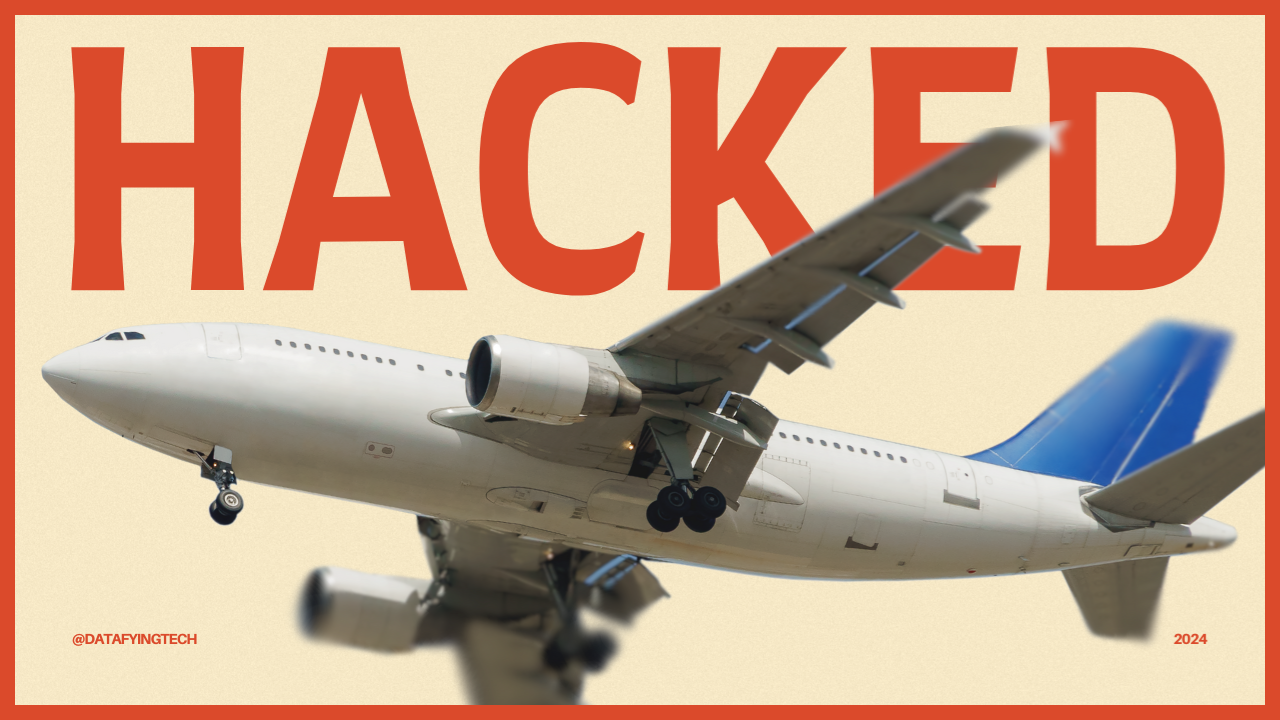
Are Airports Being Hacked? Seattle’s New Scary Reality
Are Airports Being Hacked? Seattle’s New Scary Reality
On Sunday, August 25, 2024, tens of thousands of travelers at Seattle-Tacoma International Airport (SEA) faced significant delays due to a cyberattack that disrupted the airport’s systems. As travelers dealt with long lines, limited internet access, and issues with the baggage handling system, the incident underscored the vulnerability of critical infrastructure to cyber threats. With Labor Day weekend approaching, this attack brings a new scary reality: Are airports being targeted by hackers?
The Incident: What Happened at SEA?
SEA Airport staff first noticed unauthorized activity on their systems on Saturday morning, which was later confirmed to be a cyberattack. The attack resulted in the loss of internet access for the public and severely restricted the airport’s internal communications, including email. As a result, travelers were advised not to check bags if possible, and long lines formed at security checkpoints as the airport struggled to maintain normal operations.
Lance Lyttle, Managing Director for the Aviation Department of the Port of Seattle, confirmed the cyberattack, noting that “we don’t know specifically what anyone might be after. We’re still conducting active investigations going on right now.” The ongoing investigation reflects the uncertainty and potential danger posed by such cyber incidents.
This cyberattack at SEA is reminiscent of a similar incident in October 2022, when major airports across the U.S., including Chicago O’Hare, Los Angeles International, and Atlanta Hartsfield-Jackson, were temporarily taken offline by cyber attackers. Russian hacktivist groups claimed responsibility for those attacks, highlighting the persistent threat to critical infrastructure in the aviation sector (“U.S. Airports Hit by Cyberattacks Claimed by Russian Hackers”).

A Broader Threat: Are Airports Being Targeted?
The situation at SEA raises an alarming question: Are airports being specifically targeted by hackers? The October 2022 attacks, which affected 14 U.S. airports, serve as a stark reminder of the vulnerabilities within the aviation industry (“Cyberattack Disrupts Operations at Major U.S. Airports”). These incidents highlight the growing threat that cyberattacks pose to critical infrastructure, with airports being particularly vulnerable due to their role in managing massive amounts of personal and logistical data.
Emil Sayegh, CEO and president of Profit Growth Insights, emphasized that airports are “big prizes for hackers” because of the wide-reaching disruption they can cause. He suggested that such attacks might not only be financially motivated but could also serve as tests for breaching more critical systems in the future. This perspective adds a new layer of concern, as it suggests that cybercriminals might be probing for weaknesses in airport security with more sinister goals in mind.
Following the 2022 attacks, some airports, including Atlanta Hartsfield-Jackson, began strengthening their cybersecurity defenses to protect against future threats. These efforts have been crucial in mitigating the risks posed by increasingly sophisticated cyber threats (“How Atlanta’s Airport Is Strengthening Cybersecurity After Recent Attacks”). To understand how cyber threats have been affecting other industries, such as retail and small businesses, you can read more in our article on retailer cybersecurity risks.
The Ripple Effect: Impact on Travelers and the Economy
The SEA cyberattack has already caused significant delays, and with the upcoming Labor Day weekend expected to be the busiest on record, the consequences could be even more severe if the issue is not resolved promptly. The Transportation Security Administration (TSA) expects crowds at volumes 8.5% larger than the same weekend last year across U.S. airports. If a similar attack were to occur during this period, the impact on travelers and the economy could be devastating.
Jean Koerner, a traveler at SEA, expressed frustration, saying, “It’s affected the baggage system… They told us in an email and in a text try not to check a bag if you can. Well, we can’t do that, we got a very large bag.” Such disruptions not only create inconvenience but also raise concerns about the overall security of airport operations.
These incidents not only disrupt travel but can also lead to long-term damage to a business’s reputation. For more on how businesses can protect themselves from such damaging attacks, consider reading our guide on protecting your business from cybersecurity threats.
The Need for Stronger Cybersecurity Measures
This incident at SEA Airport is a wake-up call for the aviation industry and other sectors of critical infrastructure. As ransomware attacks and other cyber threats continue to rise, with a 74% increase reported last year according to Avril Haines, the Director of National Intelligence, it is imperative that organizations implement more rigorous cybersecurity measures.
Sayegh warns of the danger of moving on too quickly after such incidents without addressing the underlying vulnerabilities. “The danger right now is that we move on and we forget about this after everything’s recovered,” he said. “It is not that complicated to protect against these threats.” If you’re wondering how to start fortifying your business’s cybersecurity, take a look at our dark web surveillance services.
Conclusion: Protecting Our Critical Infrastructure
The cyberattack at SEA Airport highlights the ongoing threat posed by cybercriminals to critical infrastructure. As the investigation continues and airport officials work to resolve the issue, this incident serves as a reminder of the importance of investing in robust cybersecurity measures. Protecting against such attacks is not only necessary to ensure the safety and efficiency of our transportation systems but also to safeguard the lives and livelihoods of millions of people who depend on these systems every day.
For businesses and organizations, this is a call to action: strengthen your cybersecurity defenses now, before it’s too late. The consequences of failing to do so could be far-reaching and severe.
Works Cited
- “U.S. Airports Hit by Cyberattacks Claimed by Russian Hackers.” NBC News, 10 Oct. 2022, https://www.nbcnews.com/news/us-news/russian-speaking-hacktivist-group-takes-credit-cyberattacks-us-airpor-rcna51121.
- “Cyberattack Disrupts Operations at Major U.S. Airports.” CNN, 10 Oct. 2022, https://www.cnn.com/2022/10/10/politics/us-airports-cyberattacks/index.html.
- “How Atlanta’s Airport Is Strengthening Cybersecurity After Recent Attacks.” Atlanta Journal-Constitution, 15 Oct. 2022, https://www.ajc.com/news/atlanta-news/hartsfield-jackson-airport-ups-cybersecurity-after-recent-attacks/TH3PTP2OH5DPRUOHYQBCUIQBEQ/.
- “SEA Airport Travelers Dealing with Long Lines Due to Cyber Attack.” KING 5 News, 25 Aug. 2024, https://www.king5.com/article/news/local/seattle/sea-airport-travelers-dealing-cyber-attack/281-47a1740b-aa44-4d0f-a627-c5b8ec1272df.
- Datafying Tech Services. “Why Retailers Are Now Irresistibly Popular Targets to Hack.” https://datafying.tech/why-retailers-are-now-irresistibly-popular-targets-to-hack/.
- Datafying Tech Services. “Protecting Your Business from Cybersecurity Threats.” https://datafying.tech/protecting-your-business-from-cyber-security-threats/.
- Datafying Tech Services. “Dark Web Surveillance for Georgia SMBs.” https://datafying.tech/services/dark-web-surveillance-for-georgia-smbs-datafying-tech-services/.